
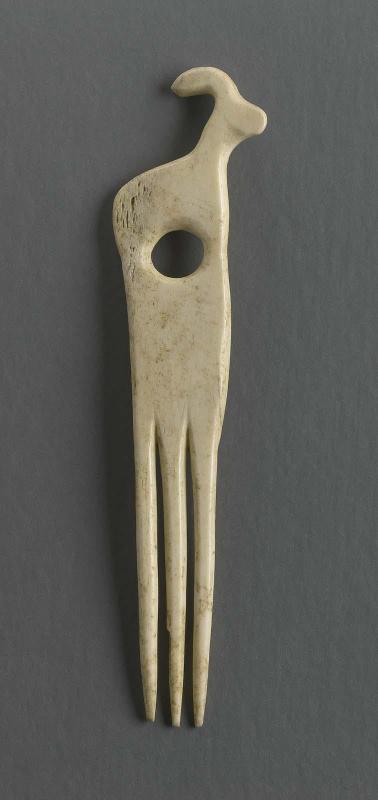
Comb
Naqada I (Amratian) 3850–3650 B.C.
FindspotNaga el-Hai (Qena), Egypt
Medium/TechniqueIvory
DimensionsHeight x width x depth: 14 x 3.7 x 14.1 cm (5 1/2 x 1 7/16 x 5 9/16 in.)
Credit LineHarvard University—Boston Museum of Fine Arts Expedition
Accession number13.3509
On View
On viewClassificationsJewelry / Adornment
DescriptionSome of the earliest three-dimensional representations of humans and animals in Egyptian art appear on small, utilitarian items such as combs, pins, and cosmetic implements. Bone and ivory combs like this one, which features the head of a gazelle were probably worn as hair ornaments. They occur from the end of the Neolithic era, and reached the height of their popularity in the earliest phases of the Predynastic Period.
ProvenanceFrom Naga el-Hai (Qena), tomb K 495. February 7, 1913: excavated by the Harvard University-Museum of Fine Arts Expedition; 1913: assigned to the MFA by the government of Egypt.
(Accession Date: December 4, 1913)
(Accession Date: December 4, 1913)
1550–1295 B.C.
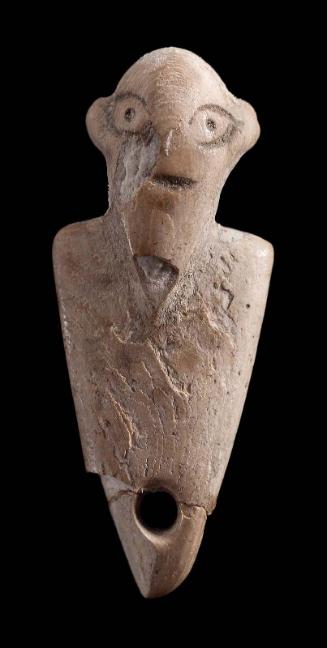
Badarian to Naqada III, 4500–2960 B.C.
2nd–1st century B.C.
332–50 B.C.
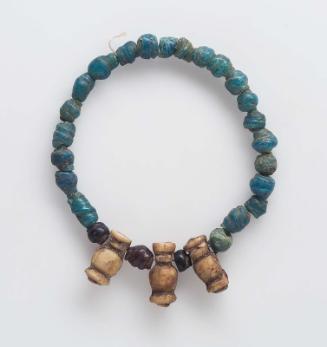
30 B.C.–A.D. 364
2960–2770 B.C.

2926–2880 B.C.