
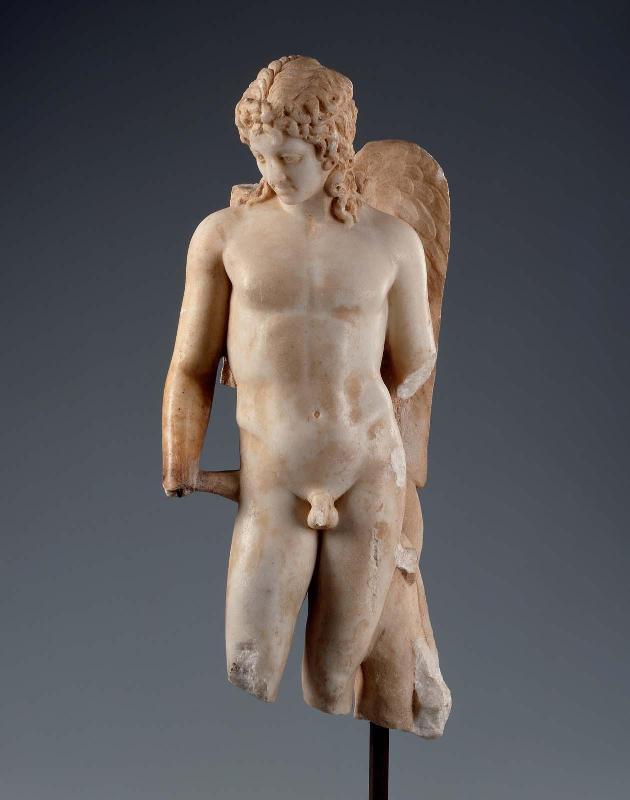
Cupid (Eros)
about A.D. 190
Medium/TechniqueMarble, probably from the Greek island of Paros
DimensionsHeight: 63 cm (24 13/16 in.)
Credit LineClassical Department Exchange Fund
Accession number1979.477
On View
On viewClassificationsSculpture
Collections
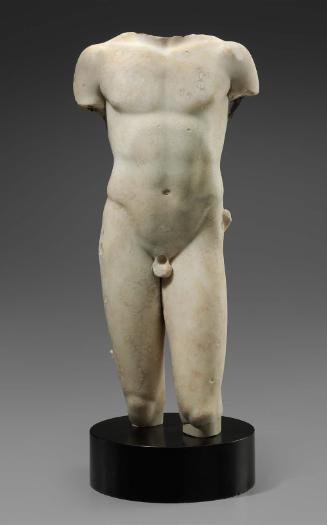
The youthful god of love, Cupid (or Eros, as the Greeks called him) stands pensively, head lowered and arms at his sides. This is one of more than twenty similar marbles thought to reproduce a common prototype. It may in turn have been modeled on an earlier Greek masterwork—perhaps a bronze by the renowned Athenian sculptor Praxiteles. For the Greeks, statues of Eros served primarily as dedications at religious sanctuaries, but Romans thought images of the playful love-god a suitable decoration for opulent residences.
ProvenanceDate unknown: said to have been found at Laodiceia ad Mare in Syria according to RDAC 1988, pt. 2, p. 141; by 1979: with Münzen und Medaillen A.G., Malzgasse 25, Basel, Switzerland (shown at Schweizerische Kunst-und Antiquitätenmesse 1979, Basel, 24 March through 3 April); purchased by MFA from Münzen und Medaillen A.G., October 17, 1979

530–515 B.C.
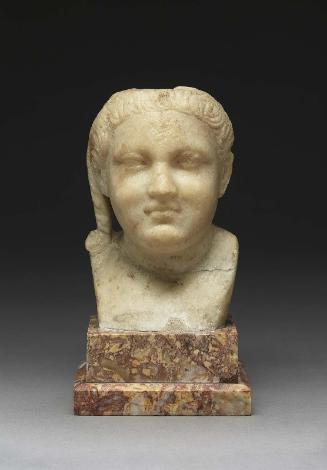
1st century B.C. or 1st century A.D.

probably A.D. 50–75
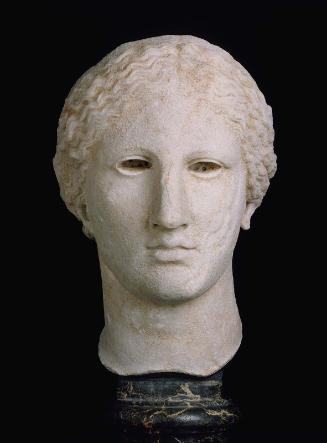
about 1st century B.C.

150–100 B.C.
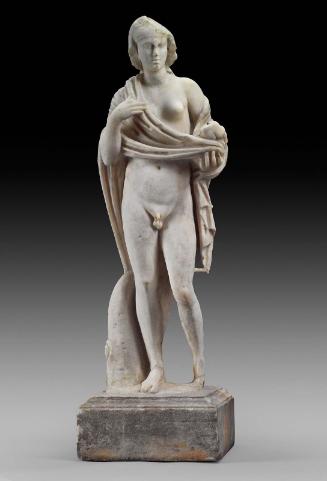
about 20 B.C. to A.D. 40
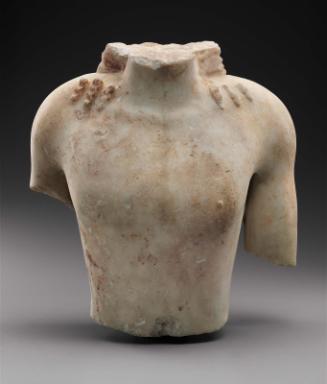
about 560–550 B.C.
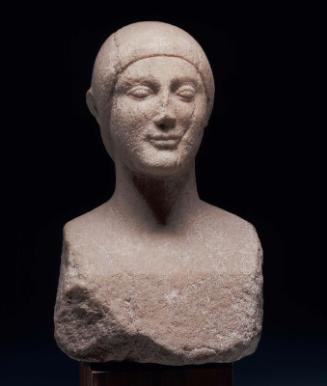
about 480 B.C.
1st century B.C.–1st century A.D.

about 470–450 B.C.
late 5th century B.C.
about 340 B.C.