
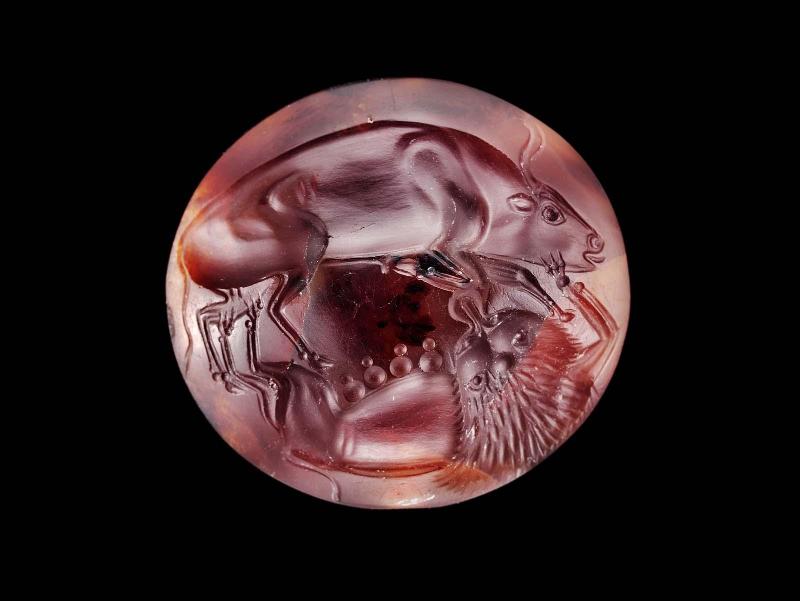
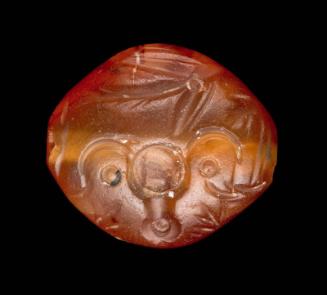
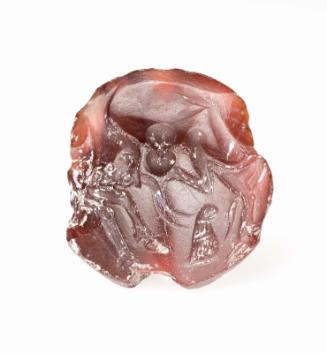
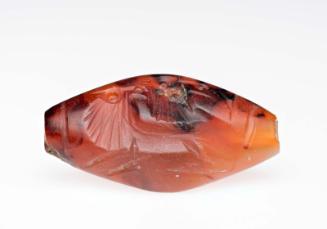
Lentoid seal with a lioness attacking a bull
about 1470–1410 B.C.
Medium/TechniqueCarnelian
DimensionsLength: 32 mm (1 1/4 in.)
Credit LineBartlett Collection—Museum purchase with funds from the Francis Bartlett Donation of 1912
Accession number23.576
On View
Not on viewClassificationsSeals
Collections
Large wild cats, the dominant beasts of the animal kingdom, have long been associated with royalty, the pinnacle of the human social hierarchy. The sovereigns of the ancient Near Eastern civilizations, such as the Assyrian kings, made lions a decorative focus of their palaces and tombs and possessed personal objects embellished with images of these ferocious creatures. Steady contact with the Near East from the Bronze Age onward infused the cultures of the Medi-terranean with this notional connection between the masters of the animal and human realms. The Helladic civilization borrowed heavily from the preceding Minoan civilization of Crete, serving as a conduit for the introduction of Near Eastern artistic themes to the Greek mainland in the late Bronze Age. This sealstone features a popular subject for early Aegean gems-a lion attacking another animal; here, a lioness, with four swollen teats hanging from her underside, bites into the forelegs and claws at the face of an overturned bull. Such gems have been found in graves of the ruling class at Mycenae; the choice of a lion as a personal insignia ensured that the owner of the seal would make an authoritative impression.
ProvenanceBy 1904: with Edward Perry Warren (according to J. D. Beazley, The Lewes House Collection of Ancient Gems, no. 3: sent from Athens in 1904); November 21, 1923: purchased by MFA from Edward Perry Warren for $ 32,948.27 (this figure is the total purchase price for MFA 23.576-23.594)

about 1635–1410 B.C.

about 1420–1315 B.C.
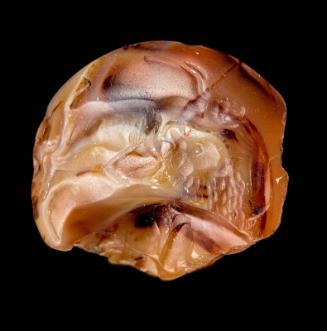
about 1635–1410 B.C. or modern

about 1635–1470 B.C.
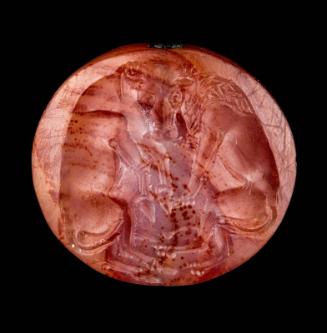
about 1635–1410 B.C.
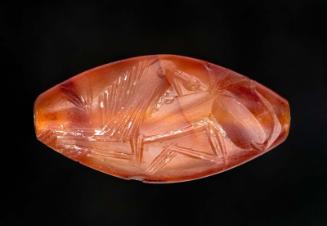
about 1700–1430 B.C.
about 1800–1430 B.C.

about 1750–1460 B.C.

about 1750–1500 B.C.
about 1470–1315 B.C.
about 1420–1315 B.C.
about 1700–1600 B.C.