
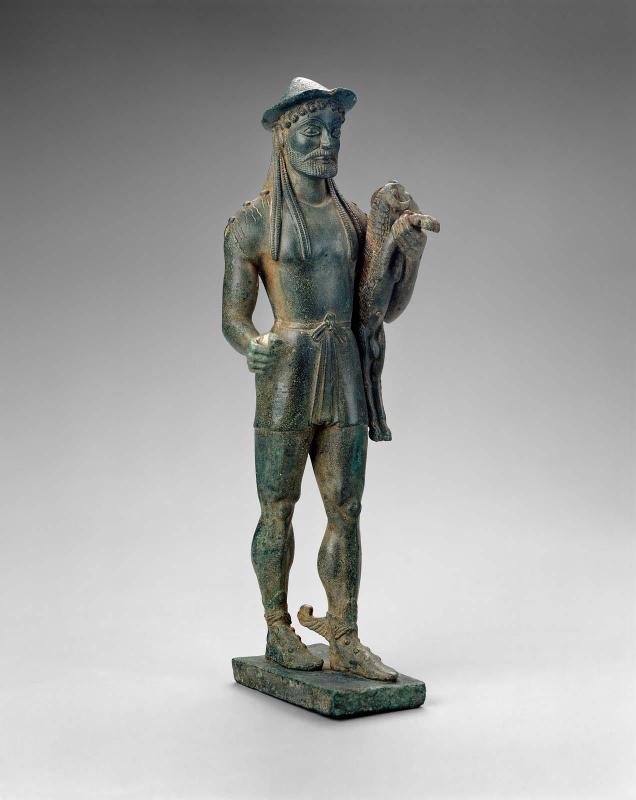
Hermes Kriophoros (Ram-bearer)
about 500–490 B.C.
Place of ManufactureSicyon (possibly), Peloponnesus, Greece
Medium/TechniqueBronze
DimensionsHeight: 25 cm (9 13/16 in.)
Credit LineHenry Lillie Pierce Fund
Accession number99.489
On View
On viewClassificationsSculpture
Collections
The distinctive costume identifies this bronze statuette as Hermes, the messenger god. Winged sandals allude to the swiftness with which he relays information, while the petasos, a broad-brimmed conical hat associated with travel and rural life, denotes his role as divine patron of shepherds. The god is here in the guise of Kriophoros, carrying a small ram. This representation of Hermes, popular in Greek art, probably relates to a legend recorded in ancient literature. The Roman-period travel writer Pausanias, explaining the origin of a temple of Hermes Kriophoros in the city of Tanagra, recounts "that Hermes warded off a plague . . . by carrying a ram around the city wall" (Description of Greece 9.22.1). Stories such as this contributed to the widely held belief that Hermes provided protection from harm in response to prayers and gifts. This statuette may have been a votive offered to the god at one of his sanctuaries.Rather than supporting the ram on his shoulders, as Hermes sometimes does in other treatments of the subject, this small bronze figure holds the animal in the crook of his left arm. His stance, with one straight leg thrust in front of the other, does not reflect the natural distribution of weight necessary for real motion, but it does generate a lively sense of animation befitting a god constantly on the move.
ProvenanceBy 1899 with Edward Perry Warren (according to Warren's records: said to come from Sparta. [Warren comments further] that it probably came from Sparta, but that it was not necessarily found there.); purchased by MFA from Edward Perry Warren, 1899, for $ 32,500.00 (this is the total price for MFA 99.338-99.542)
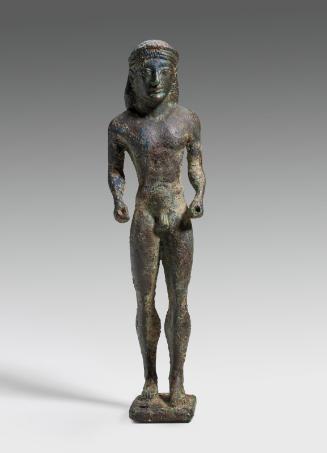
about 540–520 B.C.
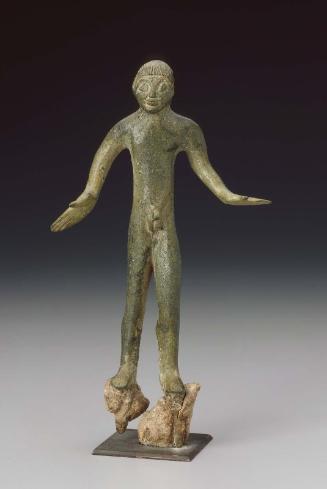
about 500 B.C.

2nd century B.C.
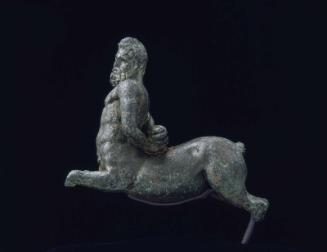
about 210–170 B.C.

Late 4th–early 3rd century B.C.

mid-4th century B.C.
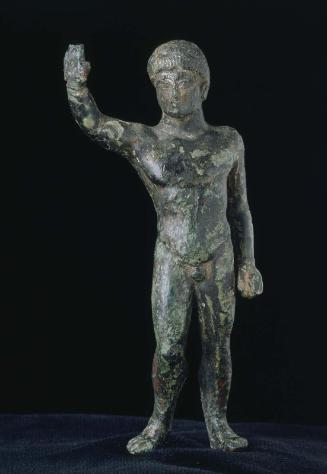
mid-5th century B.C.
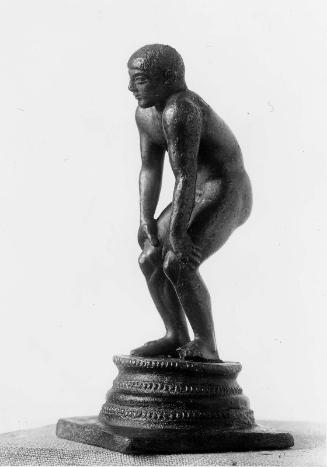
about 470–460 B.C.

about 1700–1450 B.C.

about 750–700 B.C.

750–700 B.C.

late 8th-early 7th centuries B.C.