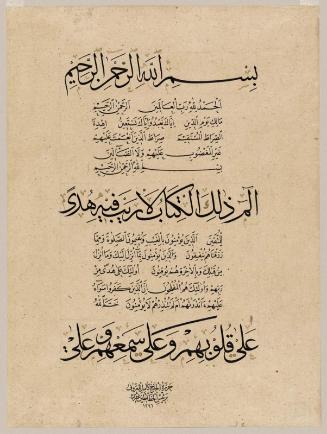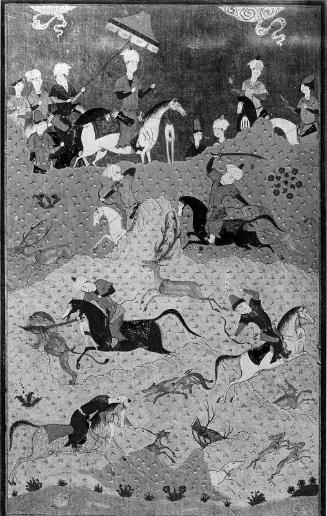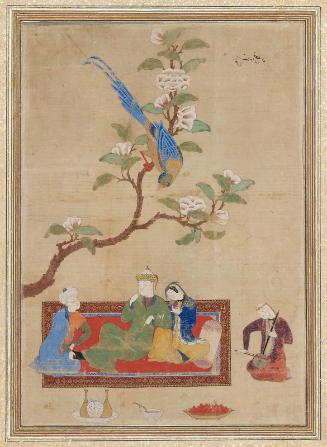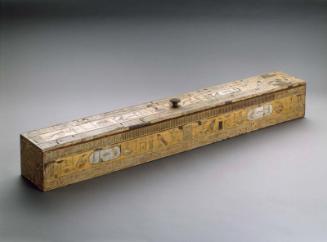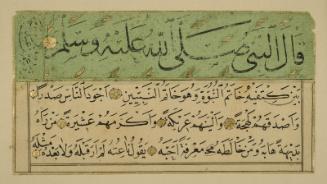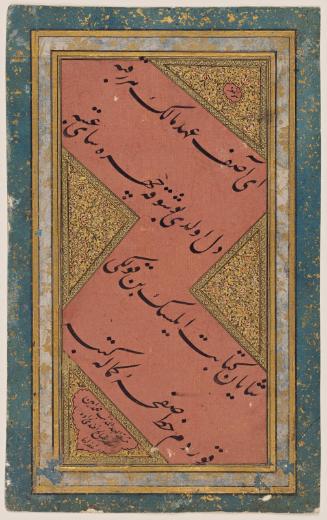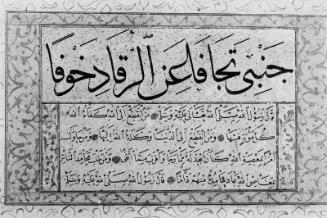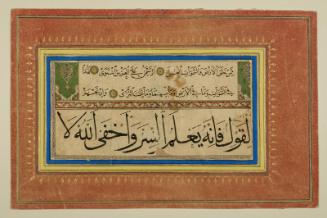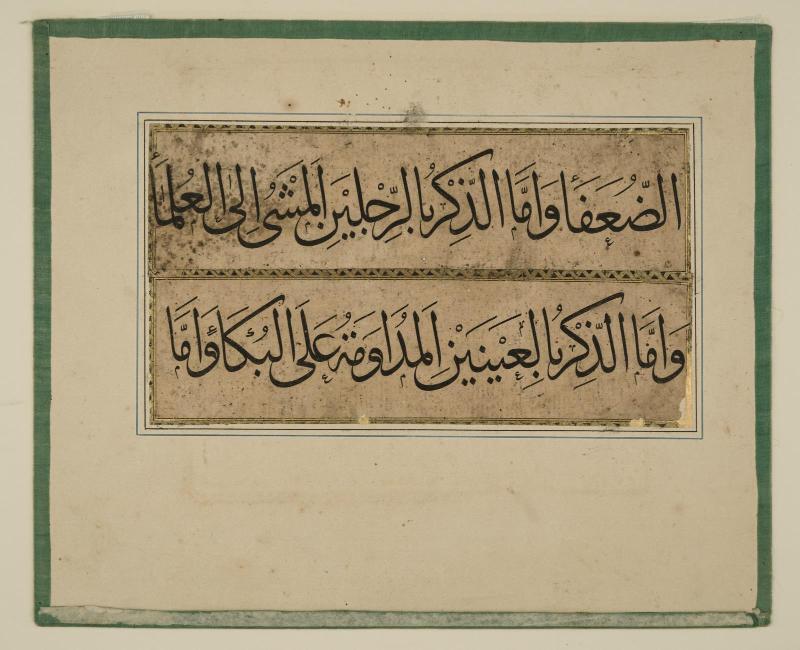
Page with calligraphy

(Ottoman, 1469 – 1556)
about 1500-1550
Object PlaceTurkey
Medium/TechniqueInk on paper
DimensionsHeight x width: 21.6 × 1 cm (8 1/2 × 3/8 in.)
Credit LineHelen and Alice Colburn Fund
Accession number29.110
On View
Not on view
ClassificationsBooks and manuscripts
Collections
Description

Ottoman calligraphers often demonstrated their skills by writing different styles and sizes of Arabic script on rectangular sheets of paper, which were then illuminated, mounted on pasteboard, and assembled into accordion fold albums, known as muraqqaʿ. This calligraphic panel was composed by Ahmed Karahisari (1469–1556), the most famous Ottoman calligrapher during the reign of Sultan Süleyman I (r. 1520–1566). He was a student of Shaykh Ḥamdullâh (1436–1520) and bestowed with the title, Shams al-Dīn (Sun of Religion). Karahisari modeled his unique style of calligraphy on that of Yāqūt al-Musta‛ṣimī (d. 1298), revered for centuries for reforming the style of "porportioned script" and mastering the "Six Pens," referring to the classical scripts: thuluth, naskh, muhaqqaq, rayhani, tawqi', and riqa'. This calligraphic panel was composed using the thuluth style of script, which Karahisari was famous for refining.
ProvenanceMiss Elizabeth (Riefstahl) Titzel (b. 1889 - d. 1986), New York; 1929, sold by Miss Elizabeth (Riefstahl) Titzel to the MFA for $5000.00 (total price for 29.56-136). (Accession Date: January 3, 1929)
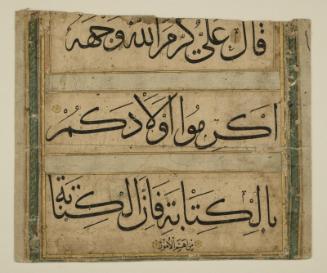
Page with illuminated calligraphy, Sayings of Ali
Ahmed Karahisari
mid-16th century or later
A Hunting Scene
Pir Ahmed bin Iskender
1515–1530
Prince and Lady under Flowering Branch
Recto early 16th century; verso about 1420–40; mounted in album about 1544–45
Muhammedi
third quarter of the 16th century
Yedikuleli Seyyid ʿAbdullâh Efendi
1731 A.D./ 1141 A.H.
Petition to the grand vizier in pursuit of a position as scribe
Ṣālih Efendi-zāde Meḥmed Emīn
about 1725
Page with calligraphy, Sura 20:4-8 of the Qur'an
Yāqūt al-Musta‘ṣimī
late 13th-14th century