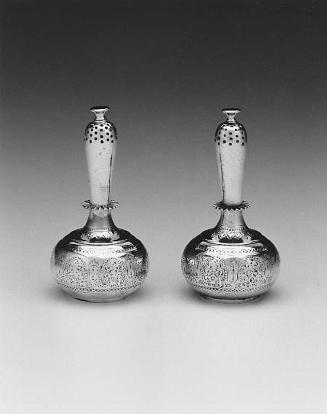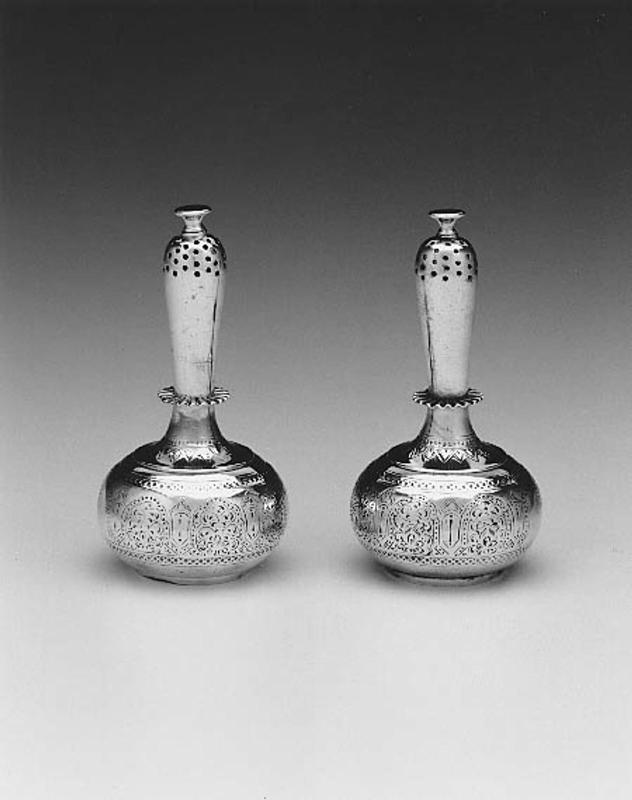
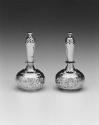
Pepper Caster, one of a pair
Filled with ground or cracked pepper, these dainty unlined casters may have been used on the dining table in combination with open salts and salt spoons. The flat-chased decoration in the Islamic style that rings the bowls provides the exotic flavor of the Eastern-influenced design that became increasingly popular after the Civil War. Carpenter notes that objects decorated in the Islamic taste were in steady production at Tiffany & Co. throughout the later part of the nineteenth century, although the style was “never all pervasive at any one time,” as was Japanese design during the 1860s and 1870s.
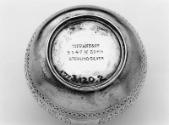
According to a recent study, the development of the use of Islamic sources by Edward C. Moore (1827 – 1891), Tiffany’s head silversmith from 1851 to 1891, falls into three phases, beginning in the late 1860s. The order number on these casters (3147) indicates a production date that falls in the early 1870s, during the first phase of designs in which Moore relied upon Islamic objects and ornament found in his own and the firm’s collection of artifacts and books. The second and third phases are characterized by Moore’s interpretations of the Eastern sources.
This text has been adapted from "Silver of the Americas, 1600-2000," edited by Jeannine Falino and Gerald W.R. Ward, published in 2008 by the MFA. Complete references can be found in that publication.