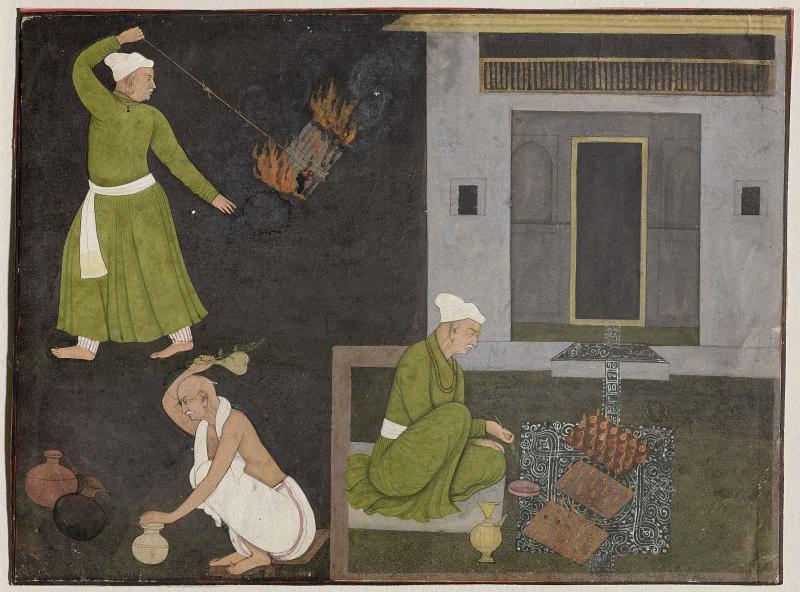
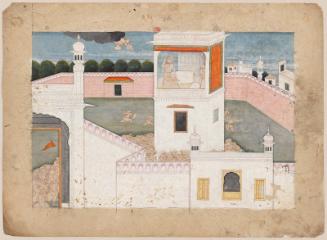
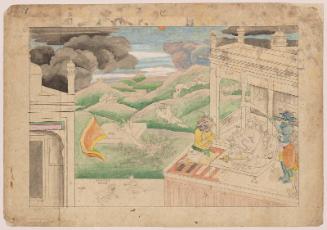
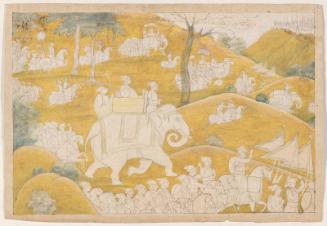
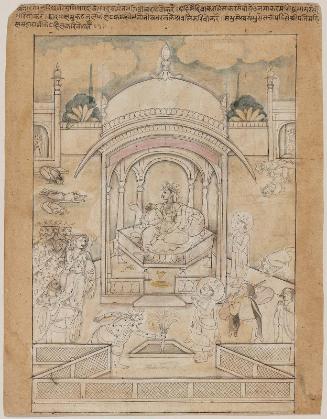
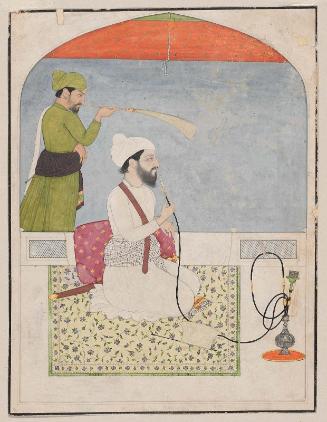
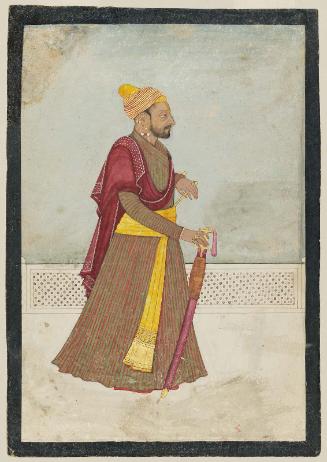
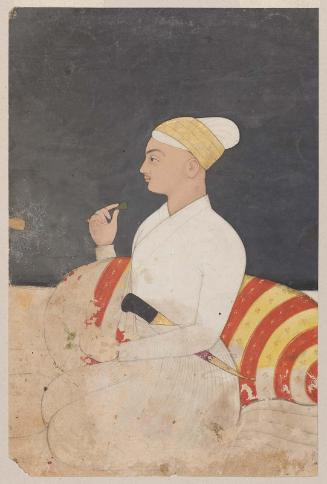
Diwali rituals
1735–40
Object PlaceJasrota, Punjab Hills, Northern India
Medium/TechniqueOpaque watercolor on paper
DimensionsOverall: 20.5 x 27.2 cm (8 1/16 x 10 11/16 in.)
Framed: 16 3/4 x 20 3/4 in. (42.5 x 52.7 cm)
Credit LineRoss-Coomaraswamy Collection
Accession number17.2622
ClassificationsPaintings
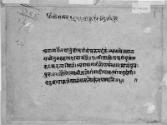
InscriptionsReverse: On the top left some calculations in devanagari script and number "7"; also on top "sri samvat 1951, akr chandre nandapure (nandapure is a village where rajas of Guler came from, in auspicious year 1951, 14th month of Agre, probably done in commemoration of some event on 14th). A doha in sanskrit follows. Transliteration and translation by Sheldon Pollock.
apāmārgaṃ tathā tuṃvī[ṃ] tṛtīyaṃ cakramarddakaṃ || bhrāmayet snānamadhye tu narakasya kṣayāya vai ||1||
One should whirl, in the midst of bathing, an apāmārga shrub [i.e., presumably, branches from an …], a gourd, and, thirdly, the cakramardaka plant, to ward off hell.
sītāloṣṭakasaṃyuktaṃ sakaṃtakadalānvitaṃ || apāpāmārga me pāpaṃ [uncertain, but see *below] bhrāmyamānaṃ punaḥ punaḥ ||2||
With [i.e., embedded in] a clod from a ploughed furrow, with thorns and leaves intact, being whirled again and again, O apāmārga, away with my sin. [uncertain]
taile lakṣmī jale gaṃgā dīpāvalyāṃ caturddaśī || candrachāyākṛtaṃ snānaṃ yamalokaṃ na paśyati ||3||
Lakshmi in oil, Ganga in water, the fourteenth day on Dipavali, a bath taken in the light [or: reflection] of the moon: One does [i.e., will] not behold the world of Yama [i.e., will not die].ProvenanceBy 1916, purchased in India by Ananda K. Coomaraswamy (b. 1887 - d. 1947); 1917, sold by Ananda K. Coomaraswamy to Denman Waldo Ross (b. 1853 - d. 1935), Cambridge, MA; 1917, given by Denman Waldo Ross to the MFA. (Accession date: April 5, 1917)