
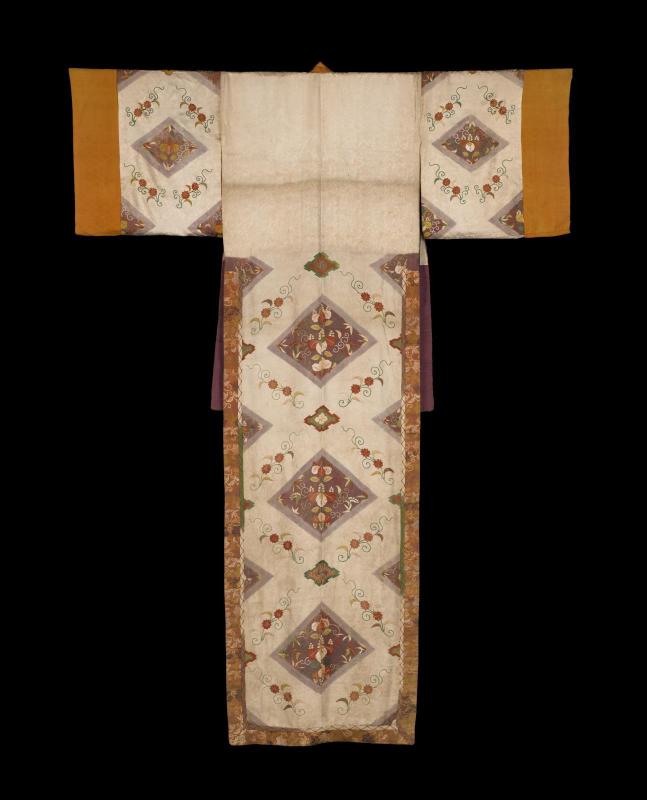
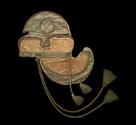

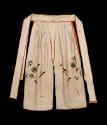
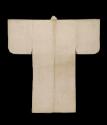
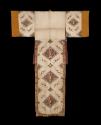
Bugaku costume in 5 parts: undercoat (shitagansane); vest (hanpi); split skirt (hakama); helmet (torikabuto) and under robe
late 17th century
Medium/Technique(Undercoat) silk damask, resist-dyed, embroidered and and trimed with karaori fabric; (Vest) silk plain weave, embroidered and and trimed with karaori fabric; (Split skirt) silk damask, resist-dyed, embroidered; (Helmut) silk and gold metallic thread (kinran) wth silk cord and metal plaque' (Under robe) silk plain weave
DimensionsLength x width (undercoat): 274.3 × 193 cm (108 × 76 in.)
Length x width (vest): 62.5 × 69.9 cm (24 5/8 × 27 1/2 in.)
Center back (split skirt): 115.6 cm (45 1/2 in.)
Overall (helmut height): 44.5 cm (17 1/2 in.)
Center back (under robe): 129.5 cm (51 in.)
Length x width (vest): 62.5 × 69.9 cm (24 5/8 × 27 1/2 in.)
Center back (split skirt): 115.6 cm (45 1/2 in.)
Overall (helmut height): 44.5 cm (17 1/2 in.)
Center back (under robe): 129.5 cm (51 in.)
Credit LineGift of John C. Weber
Accession number2016.542.1-5
On View
Not on viewClassificationsCostumes
Collections
Provenance17th century, possibly made for the Kasuga Shrine, Nara, Japan. 1997, sold by T. Yanagi Oriental Fine Art, Kyoto, to John C. Weber, New York; 2016, gift of John C. Weber to the MFA. (Accession Date: November 9, 2016)

19th century
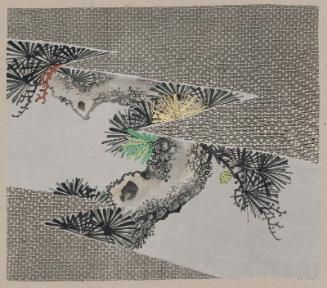
late 19th century
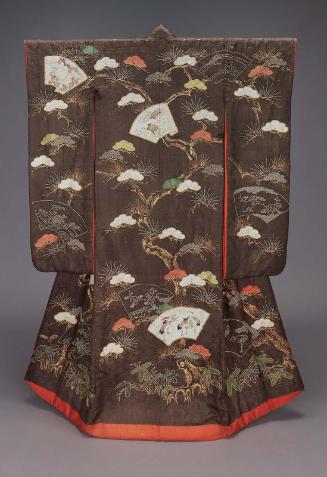
Early 19th century

18th century
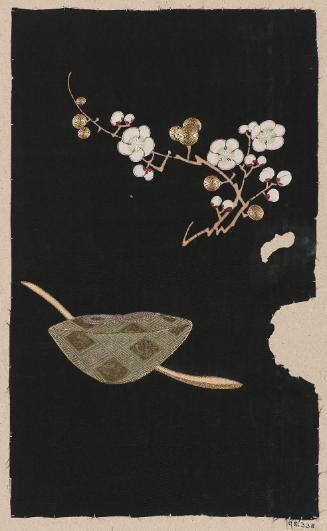
late 19th century
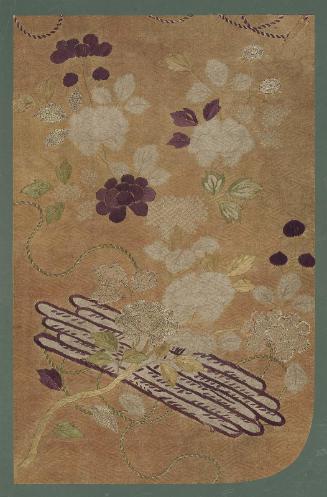
first half of 19th century
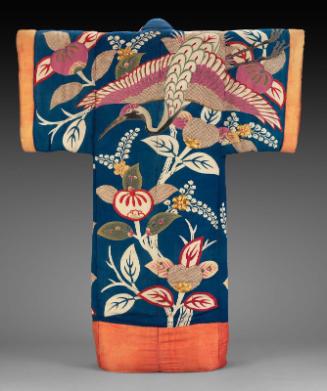
late 18th or early 19th century
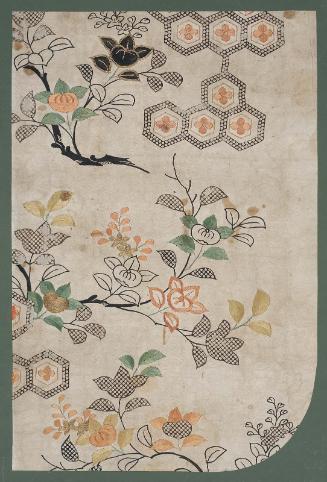
18th or 19th century
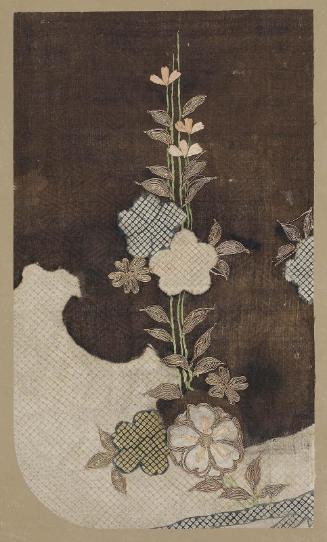
second half of 17th century
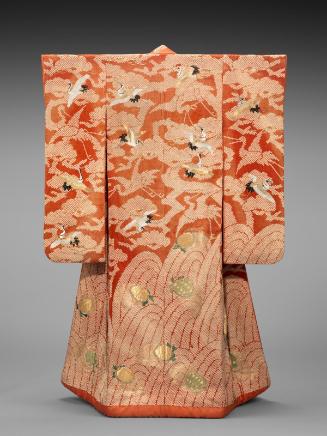
1800–50

late 17th century
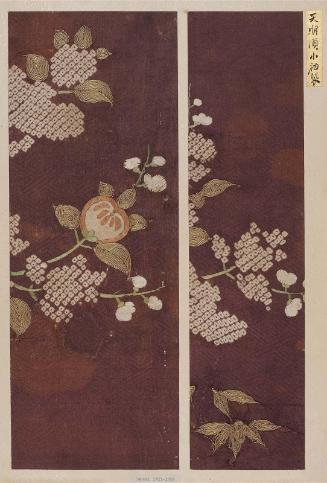
late 18th century