

Side chair with porcupine quillwork panels
1860–80
Object PlaceMaine or Nova Scotia, U.S.A., Canada
Medium/TechniqueEbonized mahogany, porcupine-quillwork with vegetal dyes on birch bark; porcelain, iron, and brass casters
Dimensions109.2 x 47.0 x 47.6 cm (43 x 18 1/2 x 18 3/4 in.)
Credit LineMuseum purchase with funds by exchange from a Gift of the Estate of Jeannette Calvin Hewett in memory of her husband Roger Sherman Hewett, Bequest of Greenville Howland Norcross, Bequest of George Nixon Black, and Bequest of Mrs. Stephen S. FitzGerald
Accession number1992.521
On View
On viewClassificationsFurniture
Collections
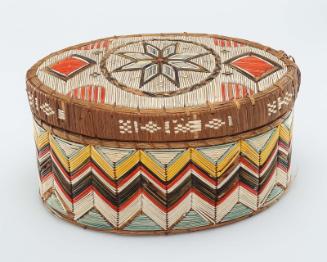
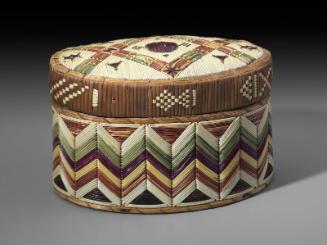
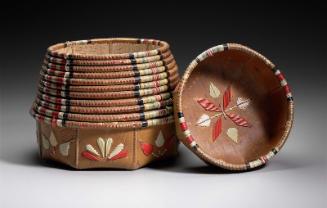
The Mi'kmaq woman who made the seat and back panel of this chair would likely have been trained within a community of women artists to harvest birch bark without harming trees, make dyes from local plants, and expertly weave porcupine quills into the geometric patterns that we see here. Along with their language and histories in present-day Maine and northeastern Canada, the knowledge of these artistic techniques was passed down through generations. By the mid-1800s, Mi’kmaq artists responded to the Victorian souvenir market by incorporating quillwork into small lidded boxes, tea cozies, and even Renaissance-revival chairs like this one. Although some settlers saw these objects as a sign of assimilation, such works also brought Indigenous design into white households and created a way for resilient Mi’kmaq women to preserve the art of quillwork, even as it changed.
Provenance1992, sold by Ted Trotta, Cortland Manor, NY, to the MFA. (Accession Date: December 16, 1992)
about 1810-1825


about 1810–20
about 1840
1880–89
about 1875
1900–25
1860–1900
about 1880–1885